Yuko Otomo – Anonymous Landscape
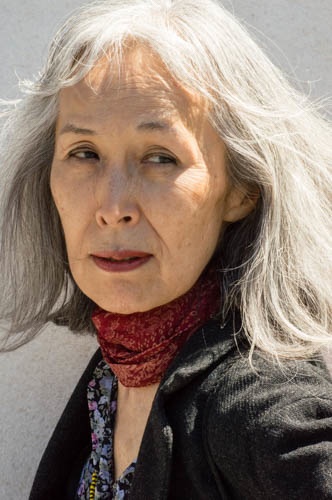
Yuko Otomo – Anonymous Landscape I recommend seeking out Anonymous Landscape, a many-faceted image painted in verse by poet Yuko Otomo during her travels in France. Published by Lithic Press in 2019, this timeless work challenges the solidity of nouns. She wonders if the early hunters and gatherers had names, if the food they collected had names, if the animals painted on the cave walls had names. She warns, “when you are too conscious of the self/ you are confined inside your name.” As I read, her poetry brings to mind the mystery of the phrase, “it’s snowing.” To what does “it” refer? The sky isn’t snowing, nor do we say, “the clouds are snowing.” We perceive the clouds as just releasing the snow. We don’t even say, “the weather is snowing.” We are so devoted to nouns, we have to insert a pronoun even where no noun is intended. But what can one do? “How do I become a verb?” she asks. Some languages are not so noun-heavy, or blur the distinction between nouns and verbs. Some say that affects a person’s perception. The intrepid Yuko Otomo is willing to challenge herself. At one moment in her exploration she observes a vase with flowers. She says, “I try to look at them / without relating / to their names / this way / I erase the boundary/ between myself & them.” This is a journey worth taking.
Read More
Margarida Garcia – Solo Composition on Good Night
Margarida Garcia – Solo Composition on Good Night Margarida Garcia has developed a fearless language on bass. Her devotion to the bass began in the very late 1990s. Like another iconoclastic bass player, Kim Gordon, the self-determination inherent in Margarida Garcia’s improvisational outflow benefits from the fact that she approached the instrument, right from the start, as a free individual, unfettered by rules. She learns, in part, by listening to the work of other musicians, such as Rudra veena master Zia Mohiuddin Dagar. But mostly she learns from herself, hands on, as the interplay plumbs the depth of both instrument and instrumentalist. This is not to say that she doesn’t have roots. Garcia has named early influences in music and art such as Max Neuhaus, Robert Smithson, Tony Conrad and Michael Snow. She has performed with many torches of improvisational and experimental music scenes, including Oren Ambarchi, Marcia Bassett, Chris Corsano, Loren Connors (who penned the liner notes for her Good Night CD), Helena Espvall, David Keenan, David Maranha, Manuel Mota, and others. Writers have discussed her music in terms of contemporary improvisation with psychedelic undercurrents. But her sound is her own creation, and her approach is her own chosen path. Garcia is firmly in the foreground, and her electric double bass asserts itself as a solo instrument. Nowhere is this more evident than in her latest release. We have Byron Coley and Feeding Tube Records to thank for issuing this remarkable recording. Good Night opens with “The Servant,” a riveting, ponderous piece. Over a period of about eight and a half minutes, Garcia layers deliberate, ponderous, sustained tones that feel like skin moving slowly against bare rock. At times, the bass reverberates like a giant cymbal. At other times, it sounds like a dragon bellowing deep within a cave. The second track is well-named. “Spirit is a Bone” rumbles in the ear like gravestones in a cemetery, a fleeting sensation that comes just before dawn. You may find yourself reaching back to recapture the dream that just floated away. But somewhere, mid-piece in this eleven-minute tome, a fathomless river of sound moves you into a more challenging journey. The recording closes with a stunningly beautiful composition. “Good Night,” which well-deserves its ranking as the title piece, is both deep and uplifting. The music breathes slowly, gently moving vibrant oxygen into the blood, nourishing the body and the spirit. Washes of sound fill the cavern and float you up into the moonlight. You have known the rock. You have known the dragon. You have known the journey. And you are richer for it. FTR716, released October 26, 2022. https://feedingtuberecords.bandcamp.com/album/good-night
Read More
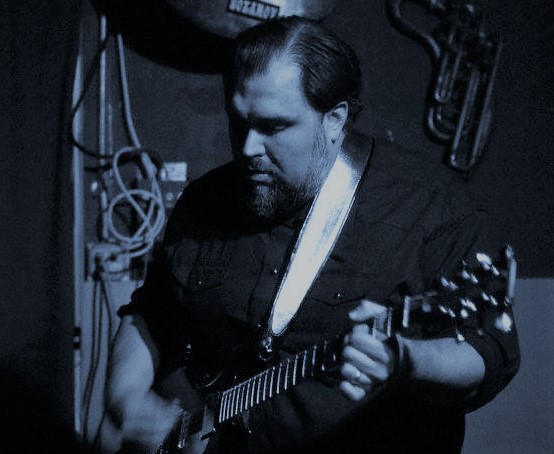
John Kolodij – Guitar Composer of Earth and Fire
John Kolodij – Guitar Composer of Earth and Fire It’s a good day to talk about John Kolodij. As part of the Iceberg trio, he has a new record out, which I recommend. But I also want to make sure you know about two remarkable releases he issued in 2020. If you missed them, I encourage you to remedy the situation immediately. I started today’s sound adventure by listening to his newest LP, Final Thaw, issued by Astral Spirits. Here, he works in trio with Dylan Baldi on saxophone and Jason Gerycz on drums and percussion. Kolodij sets the mood for the opening on each of the two featured pieces, and I settle in for a good listen. After a spell, each piece moves into swifter, louder territory, in a free rock vein. There’s plenty of musical skill to go around. Just when you think Baldi is about to play a standard jazz riff, he hits an unexpected note, with unexpected graininess. Gerycz’s drumming can be quiet yet compelling, and even when he builds to a peak, he still executes each strike as a note. John Kolodij’s subtle chords and washes of sound keep the music traveling, even when he’s rumbling under the extended crescendo. But I confess to a yen for guitar composers and it’s not enough Kolodij for me. So for a more complete tribute, I return to two magnificent Kolodij releases from 2020. First I contemplate Kolodij’s work on the split LP, Ezra Feinberg & John Kolodij, released by White Sepulchre (WSR 025). I focus on “Geometry of Space,” a nine-minute work that would make a great soundtrack for the newest images from space. Kolodij works with earthen patience, evoking sound sculptures through guitar, organ and electronics. When another instrument, Dylan Baldi’s saxophone, comes into the piece, a listener might feel a moment of concern. But not to worry. Baldi’s instrument folds into the music and enhances rather than overrides. This work is a road well taken. Then I turn to First Fire-At Dawn. The universe demands that this fine cassette from Astral Editions (AE013) be re-issued on vinyl. Cassettes are fragile, and this music should be preserved. “At Dawn” is a delightful work that features banjo, birds, Anna RG on fiddle and Sarah Hennies on percussion. A satisfying piece that gives one a new perspective on the instruments, played as they are in the hands of these artists. But what I really want to talk about is the mesmerizing piece called “First Fire.” The notes permeate rather than penetrate. The sound takes the listener deeper and deeper. About halfway through, you may think you hear a tune, but it’s more like an ancient chant by be-robed supplicants in a stone underground chamber. By the second half, you know you are listening to deep composition. The piece closes with a light, sweet pelting of notes, like drops of water rolling off a leaf. I hear Loren calling from the other room. “What are you listening to?” I smile as it pulls him in. I had no doubt. I knew it would. Keep it coming, John. Give us more.
Read More
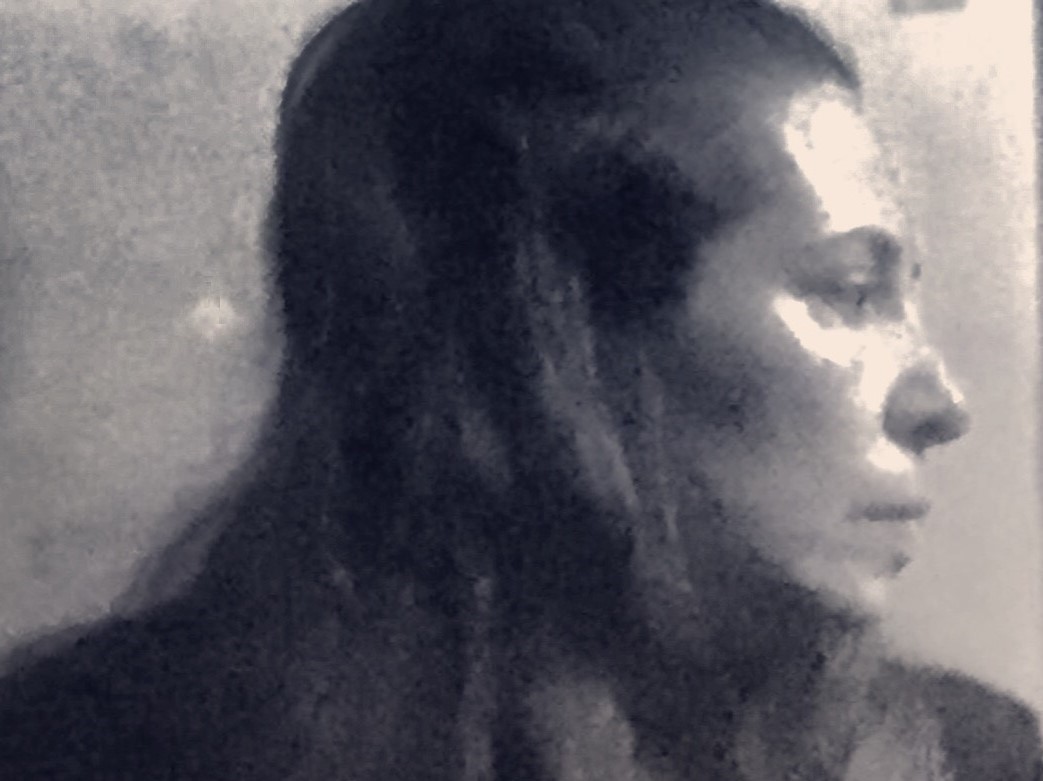
Samara Lubelski – A Journey
Samara Lubelski – A Journey Photo by Laura Ortman It’s important to listen to Samara Lubelski when she is playing solo. This is not to dismiss her excellent collaborations. I have heard Samara Lubelski in duos, trios and ensembles, including with my roommate Loren, and she is decidedly “exceptional value added” to any of these settings. I particularly appreciate her adventurous work with the intrepid sound artist Marcia Bassett, with whom she recently completed a tour in Spain and Portugal. Still, it is worth your time to take a raincheck on your other listening activities, and settle into solo Samara Lubelski. I had an opportunity to do that most recently at Ka Baird’s loft, when Lubelski performed as part of Baird’s recently revived and ever welcome “Pineapple Realty” music series. I had heard solo Lubelski, as she has a long and impressive track record of solo recordings. And I had seen and heard her play extended solo segments as part of a night of collaboration. But I had not experienced in person the impact of a full, dedicated solo performance by Samara Lubelski, with both her and her listeners undistracted by any collaboration coming before or after. It is different. It is all-consuming. I get annoyed when people attempt to discuss Lubelski’s music in terms of genres, describing it as a “nod” to psychedelia, abstract folk, noise or drone. She is none of those, and nowhere near them. What Samara Lubelski generates is not a product. It’s a communication that permeates your shell. She plumbs the depth of profound thought. It’s like being alone with yourself and listening to the echoes of your bone structure. But it doesn’t just stay there. Samara’s music travels. She takes you on a journey. There’s something about being in the room with a sound, at the time it first emerges. Perhaps the sensation comes from the essence of vibrations that don’t get captured no matter how the music is recorded. The infinity within a moment of vibration. I found, after hearing Samara Lubelski in a live, in-depth performance, that I got more out of her recorded work as well. That may be one of the secrets behind her 2020 release, Partial Infinite Sequence. Our minds can only grasp part of an infinite sequence at a time, but the potential of infinity nevertheless is felt in every excerpt. I remember a music store called “Lunch for Your Ears.” It seemed like an odd name, at first, but actually, Manny Maris was right. We all need our musical nutrients. If you are in the NYC area, you can experience the Samara Lubelski phenomenon yourself on July 23, 2022 at P.I.T., 411 South 5th Street in Brooklyn. 8pm. You will also benefit from an exceptional treat that night: A reunion of Peeesseye (actually, I’ve never been sure of how many e’s or s’s are in the name), the intriguing trio of Chris Forsyth, Jaime Fennelly, and Fritz Welch that launched somewhere around 2002 and blessed the Brooklyn music scene and beyond for about a decade. Get your nutrients.
Read More
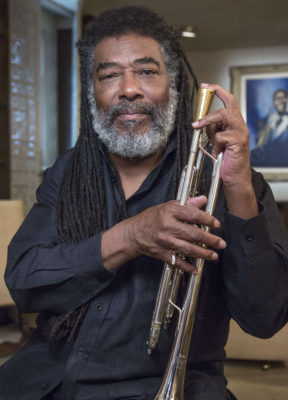
Wadada Leo Smith – Pacifica Koral Reef – with Henry Kaiser and Alex Varty
Wadada Leo Smith – Pacifica Koral Reef – with Henry Kaiser and Alex Varty Image by Jimmy Katz I first heard Wadada Leo Smith in the mid-1980s in New Haven. From the first note, he had my full attention. I remained riveted throughout his performance. I heard not a single “busy” note – a common sin among instrumentalists. Nor was there the tiniest fraction of “filler” or “transition.” He made no attempt to surprise me, yet every note came to my ear fresh. It was uncontaminated music, and there’s nothing easy about that. Musicians pay a hefty price to master the craft. All the while, as they learn their way around their instrument, both instructors and peers deluge them in do’s and don’ts, should’s and shouldn’ts. So much to learn, but so much to unlearn. How did Wadada Leo Smith find the courage to let go of so much, and the fearless will to develop his own language and terminology to describe a work of art that is “realized in the present moment”? His use of the word “creation” rather than “improvisation” is apt. Improvisation without creation is empty. It’s that busy filler or transition that always makes me cringe and cast about for the exit. Time and time again, I have immersed myself in his music, with no disappointment – or even the slightest fear of disappointment. Sometimes you just know who you can trust. So here I am, almost 40 years after that first listening experience, turning my ear to Wadada Leo Smith again, in a magnificent work called Pacifica Koral Reef (577 Records), released January 7th of this year. There’s a world weariness in the sound of his trumpet, coming at 10:45 minutes into the work, followed by mournful cries. He’s not just “talking about” the dying coral reefs. He has given himself over, so the coral can speak through him. But the music doesn’t languish in mourning. One hears Smith’s demand to be heard, augmented by Henry Kaiser’s assertive yet eloquent electric guitar feedback. One also hears Smith’s introspection, parsed by Alex Varty’s thoughtful acoustic journeys within the piece. Finally, one hears an assertion of “presence” – the deep and complex culture of the reef that has survived so many centuries, and rightly calls out for acknowledgement and respect. How can we live with ourselves, if we allow its destruction? Pacifica Koral Reef communicates more powerfully than any book or journalistic expose. It reaches in and grasps the heart of the listener. Unlike the pollution attacking the reef as it contaminates the water and drives up temperatures to organism-killing levels, Wadada Leo Smith’s music is—as ever—uncontaminated.
Read More
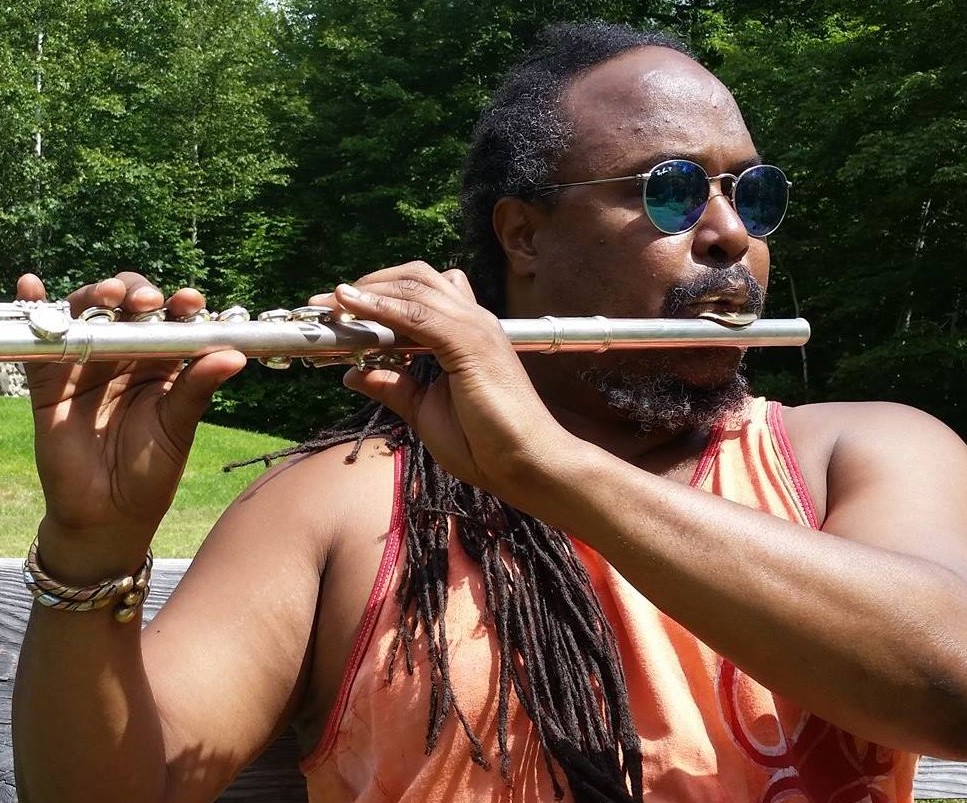
Revisit Outsight by Ras Moshe
Revisit Outsight by Ras Moshe Ras Moshe, Outsight, Straw2Gold Pictures label,S2G-007, March 2013. This recording falls into the “go back and listen again” category. Which is just what I did the other day with this 2013 release. Ras Moshe often likes to stretch his musical limbs when he plays. So don’t look for brief little ditties here. This is music to hang with, or better yet, to swim through. Roll around. Get immersed. Flex your listening muscles. Don’t limit the experience just to your ears. Listen with your whole body. On the first piece, “I Hear You,” Moshe’s ribbons of tenor sax are lofted by the probing bass of Tom Zlabinger and vibrant drum of Lou Grassi. I wasn’t ready for it to end, but I was immediately mollified by Daniel Levin’s cello, launching into Convergent Circle One. Here, Ras Moshe’s soulful tenor meanders gently in like a brook in a woodland, then flows with increasing strength. His challenges spur skilled, subtle responses from James Keepnews on electric guitar. Then Matt Lavelle trumpets his way into the mix, bringing more color and texture that Moshe embraces and amplifies. It becomes a wild, delicious dance of instruments, joined by Chris Forbes’s tempestuous piano. This is followed by three more pieces in the Convergence Circle series. Stellar music by stellar instrumentalists. The final piece, meditation for David S. Ware, is a fitting tribute to an avant saxophone player. Ware had passed away in October 2012, but Moshe had actually dedicated the piece to his friend and colleague before death took him. The work features Moshe’s eloquent saxophone, with Daniel Levin on cello and both Tom Zlabinger and Max Johnson playing bass. The absence of percussion makes the piece introspective. The rhythms feel more like breath and heartbeat. The spiritual undertones are ever present, like a soul floating about the room. Go back, I welcome you, to 2013, and listen to this profound, timeless recording. I couldn’t find a place to buy the original CD, but the MP3 for the full record can be purchased from Amazon.
Read More